 LESSON
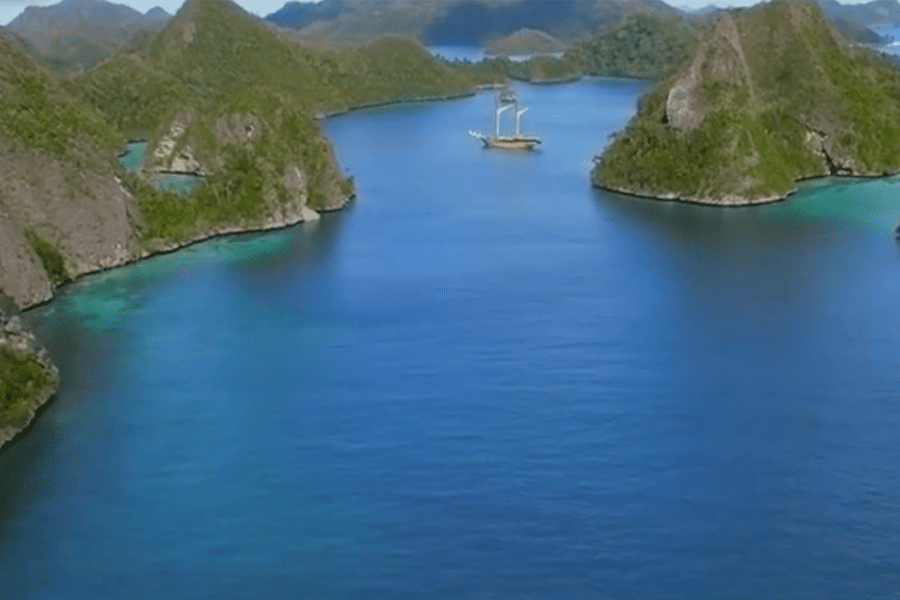
In this lesson, students explore Monsoon Asia through immersive geography challenges.
Experience the LessonInquiry-based programs where students analyze primary sources, build evidence-based arguments, and take part in rich discussion, in print and digital.
See the Social Studies overviewSee how TCI engages all learners and provides comprehensive teach support to Bring Learning Alive! in K-12 classrooms.

Active learning, teacher-ready lessons, and a high-quality curriculum have always been at the heart of TCI. The new programs are sharper, more consistent, and built as a true K-12 system.
Bring Science Alive! is phenomena-driven and NGSS-aligned. Every unit opens on an anchoring phenomenon, then students investigate it the way scientists do.
See the Science overview
In this lesson from our Bring Science Alive! Weather and Climate program, students create their own wind, build a balloon barometer, and track atmospheric pressure.
Self-paced courses, live events, and opportunities to connect with or lead other educators — support that continues long after implementation week.

Join Brian Thomas and Loyal Frazier on October 20 at 6 pm ET for practical ways to help students evaluate sources and the growing volume of online and AI-generated information.
Research-backed guidance on the questions districts are actually asking — from HQIM adoption to AI in the classroom.

Michael Washington, a 22-year classroom veteran, sees differentiation as how a lesson itself, built through active learning strategies, can reach every student in the room at once.
Built by teachers, for teachers.
Bringing Learning Alive! since 1989.

Megan Forbes is in her 15th year of teaching, and the program bends to how she wants to teach that day. Some days, that's the textbook and interactive notebook. Other days it's a Video Activity.

Students investigate how geography shapes human choices, and how people reshape the world in return. Using maps and primary sources, they analyze the forces that connect the physical and human world.
The tools and thinking of geography come first: how geographers show information on maps, and why they use many kinds of maps to represent the world. Students also explore the subfields of geography, from economic to cultural, and the five themes of geography.
Canada and the United States are the focus here, beginning with the physical and human geography of both. Students study how Indigenous groups adapted to their environments, how to best use and protect the Great Lakes, and how urban sprawl, consumption, and migration affect people and places.
Lessons on Latin America range from early civilizations in the Americas to the spatial inequality that shapes life in Mexico City. Students look at how the Maya preserve traditional culture, what causes Caribbean hurricanes, and how the Amazon rainforest's resources should be used and preserved.
Europe and Russia raise questions about cooperation, with students weighing the forces working for and against the European Union. Other lessons take up population trends, pollution that crosses borders, the physical processes shaping Russia's landscape, and the nation-states formed from the old Soviet empire.
In Africa, students follow the Nile from source to mouth to see how rivers change as they flow across Earth's surface. Lessons also cover life in the Sahara and Sahel, women micro-entrepreneurs, Nigeria's many cultures, and power and resources in post-apartheid South Africa.
Southwest and Central Asia center on how a valuable natural resource like oil shapes a region. Later lessons focus on Istanbul as a primate city and bridge throughout history, and on the Aral Sea, Central Asia's shrinking water source.
Monsoon Asia begins with the seasonal rains and how climate influences human activity across South Asia. Students also study India's comparative advantage in the global IT revolution, China's demographic challenges, population density in Japan, and the global journey of a sneaker made in Asia.
Oceania and Antarctica close the program. Students use relative and absolute location to explain what makes Australia unique, then explore how people adapt to life surrounded by ocean in the Pacific Islands and Antarctica.
LESSON
In this lesson, students explore Monsoon Asia through immersive geography challenges.
Experience the LessonSee every unit and lesson at a glance.
Get a quick, visual snapshot of the program — key features, components, and what makes learning come alive in the classroom.
See exactly how the program aligns to your state standards.
Request access to digital samples of the student and teacher materials.
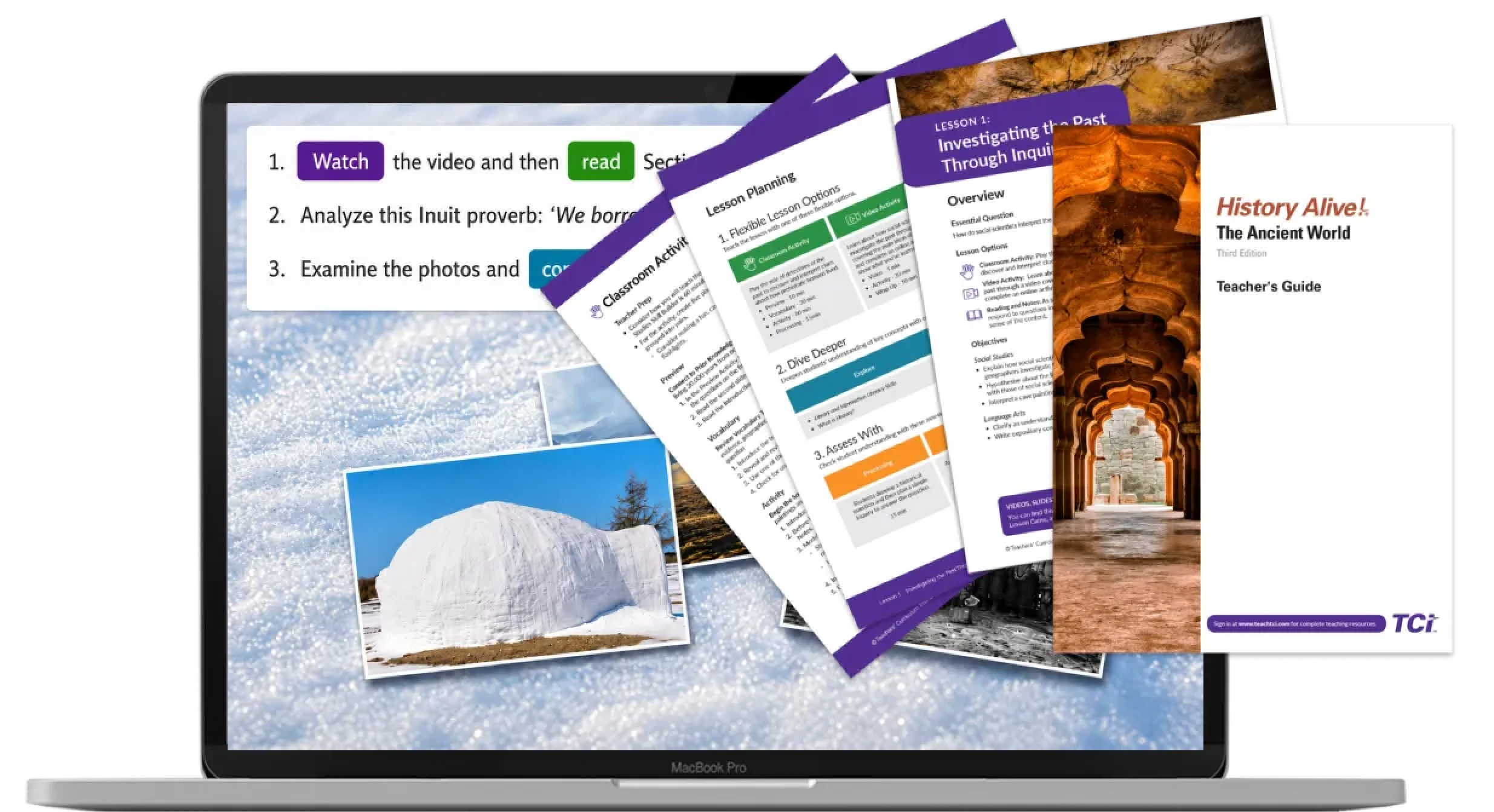
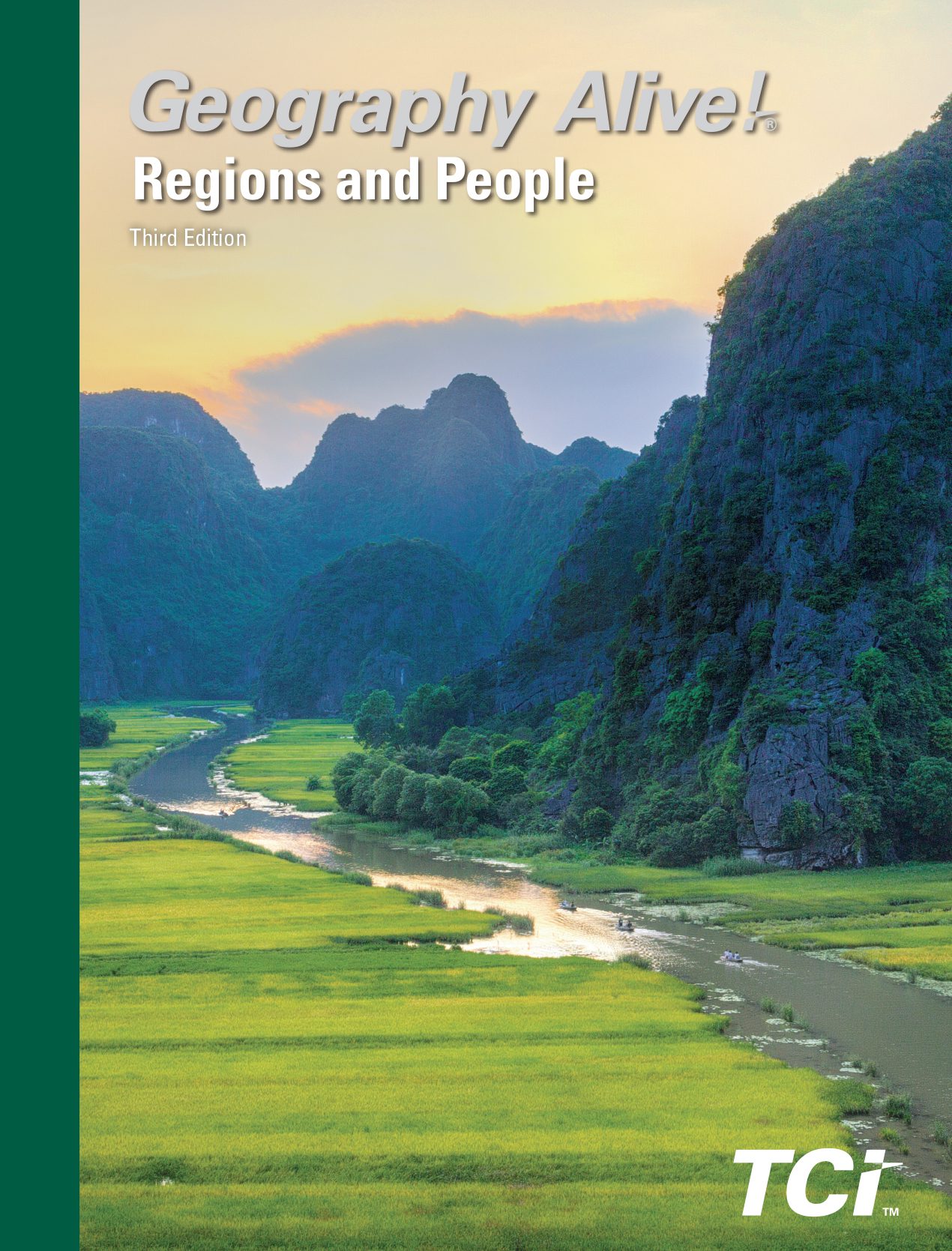
The Student Edition provides a rich knowledge base in geography, with mindfully chosen images that support the text and captions that incorporate main ideas. The standards-based text guides students through their learning with clear content organization and a detailed, unifying narrative. Also available in Spanish.
The consumable Interactive Student Notebooks allow students to engage with their learning by expressing their ideas, completing graphically organized notes, and developing personalized responses. Also available in Spanish.
Teacher's Guide supports everything from lesson planning to grading — step-by-step procedures, time estimates, differentiation strategies, and answer keys, ready to use offline or as a quick reference while teaching. Also available in Spanish.
The Placards are laminated, reusable activity resources that engage students in analyzing historical images, graphs, maps, and primary sources. Also available in Spanish.
Whether you're exploring programs, preparing for an adoption, or ready to get a quote — our team is here to help.
Connect with a TCI Expert