 LESSON
In this lesson, students use historical recall and critical thinking skills to win big points in the What's That Tool? game.
Experience the LessonInquiry-based programs where students analyze primary sources, build evidence-based arguments, and take part in rich discussion, in print and digital.
See the Social Studies overviewSee how TCI engages all learners and provides comprehensive teach support to Bring Learning Alive! in K-12 classrooms.

Active learning, teacher-ready lessons, and a high-quality curriculum have always been at the heart of TCI. The new programs are sharper, more consistent, and built as a true K-12 system.
Bring Science Alive! is phenomena-driven and NGSS-aligned. Every unit opens on an anchoring phenomenon, then students investigate it the way scientists do.
See the Science overview
In this lesson from our Bring Science Alive! Weather and Climate program, students create their own wind, build a balloon barometer, and track atmospheric pressure.
Self-paced courses, live events, and opportunities to connect with or lead other educators — support that continues long after implementation week.

Join Brian Thomas and Loyal Frazier on October 20 at 6 pm ET for practical ways to help students evaluate sources and the growing volume of online and AI-generated information.
Research-backed guidance on the questions districts are actually asking — from HQIM adoption to AI in the classroom.

Michael Washington, a 22-year classroom veteran, sees differentiation as how a lesson itself, built through active learning strategies, can reach every student in the room at once.
Built by teachers, for teachers.
Bringing Learning Alive! since 1989.

Megan Forbes is in her 15th year of teaching, and the program bends to how she wants to teach that day. Some days, that's the textbook and interactive notebook. Other days it's a Video Activity.

Students trace the story of the Americas, from early civilizations through the Columbian Exchange to the documents that shaped governments. Primary sources and case studies make the past tangible and worth investigating.
What comes to mind when you hear the word invention? You may think of items such as the automobile, the light bulb, and the cellular phone. For prehistoric peoples, however, inventions came in much different forms. Archaeologists consider the Clovis point to be one of the first American inventions. A Clovis point is a sharp object made by chipping pieces of brittle stone, such as obsidian. Paleo-Indians attached them to spears for hunting. One of the most interesting things about Clovis points is where they are found—all over North America. This suggests that early peoples in the Americas had some form of shared culture. It also suggests that different groups came into contact with one another. How might geography have shaped the spread of Clovis culture? How might it have affected the development of other prehistoric cultures?
A totem pole is a large log that is carved and painted. Totem poles are usually made from red cedar trees. They often feature animal faces such as wolves, eagles, orcas, and salmon. Peoples of the Northwest Coast of North America create totem poles for many reasons. They may mark graves or honor important people. Others are placed near water as a sign of welcome to visitors. The use of totem poles is one of many shared characteristics of the peoples of the Northwest Coast. What do the materials and design of totem poles say about how people were affected by the geography where they lived? How else did the lands that people lived on influence their cultures?
The ruthless pursuit of treasure and glory was just one reason people wished to explore and colonize the Americas. In the 1500s and 1600s, many European explorers heard the legend of El Dorado, a city made of gold. They explored the Americas to find places like El Dorado that would bring them gold and wealth. Modern historians and archaeologists know that El Dorado did not exist. However, Europeans did find gold elsewhere in the Americas. The arrival of Europeans would have significant consequences for the peoples and resources of these two huge continents.
Voting in elections is an important part of democracy. Citizens head to the polls for local, state, and national elections to make their voices heard. They vote on issues that are important to their communities and their state. They also reelect leaders or choose new leaders to represent them in the government. There are many democracies in the Western Hemisphere, all of which include some form of voting. What are other important features of a constitutional democracy?
The economies of countries around the world are interconnected. People produce goods and services. Ships, trains, trucks, and airplanes carry these goods and services to people around the world. Transportation, producers, and consumers make up the global supply chain. For example, the United States exports airplane parts to other countries. It also imports consumer goods such as vehicles from Mexico and clothing from China. Many things can affect the global supply chain, including conflict and climate change. Disruptions can result in shortages, meaning fewer goods are produced and delivered to consumers. When this happens, the prices of goods go up. Why does this happen? How do events like this affect the choices people make?
LESSON
In this lesson, students use historical recall and critical thinking skills to win big points in the What's That Tool? game.
Experience the LessonSee every unit and lesson at a glance — compelling questions, objectives, and how content builds across History, Geography, Civics, and Economics.
Get a quick, visual snapshot of the program — key features, components, and what makes learning come alive in the classroom.
See exactly how the program aligns to your state standards.
Request access to digital samples of the student and teacher materials.
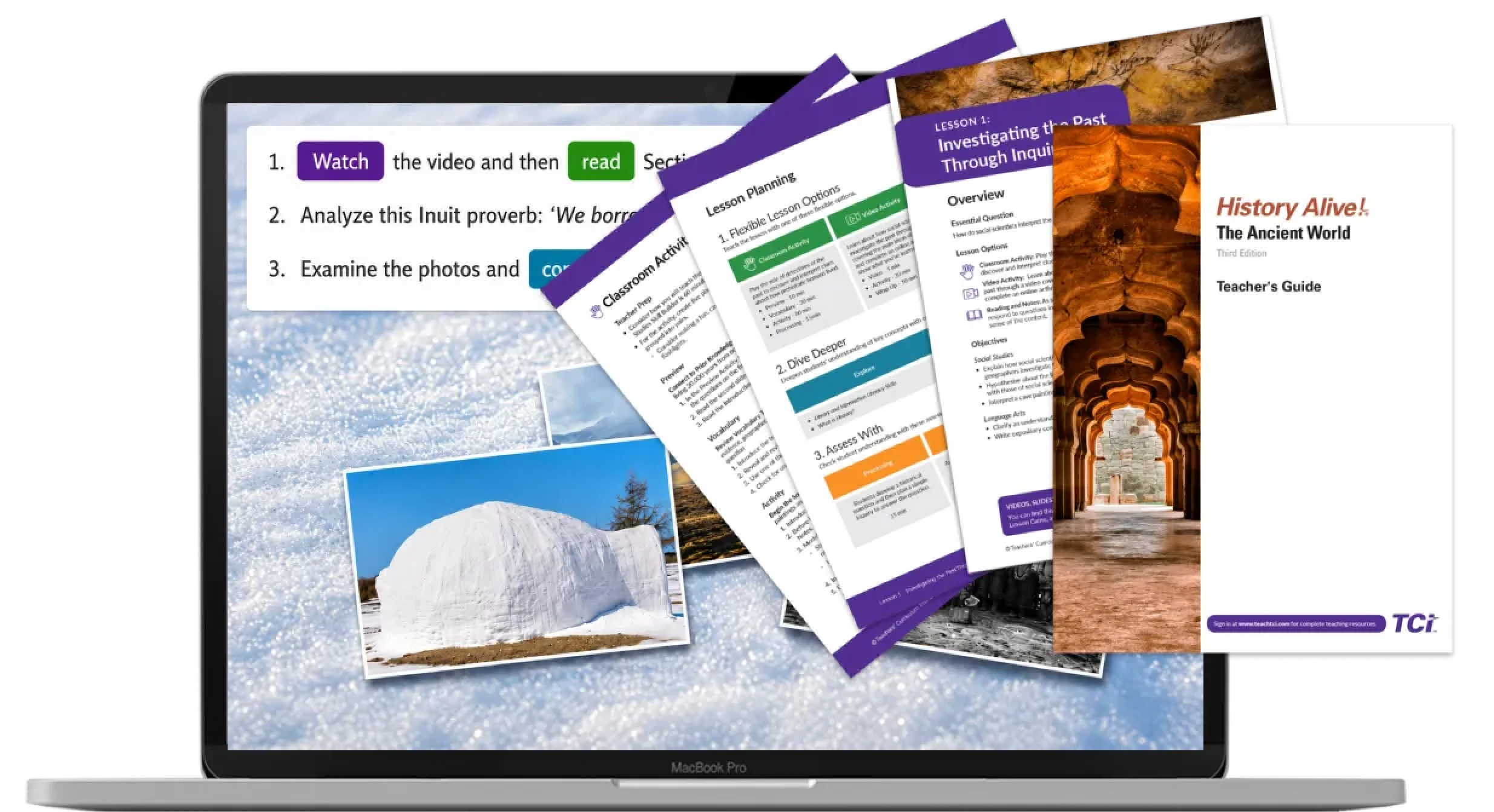
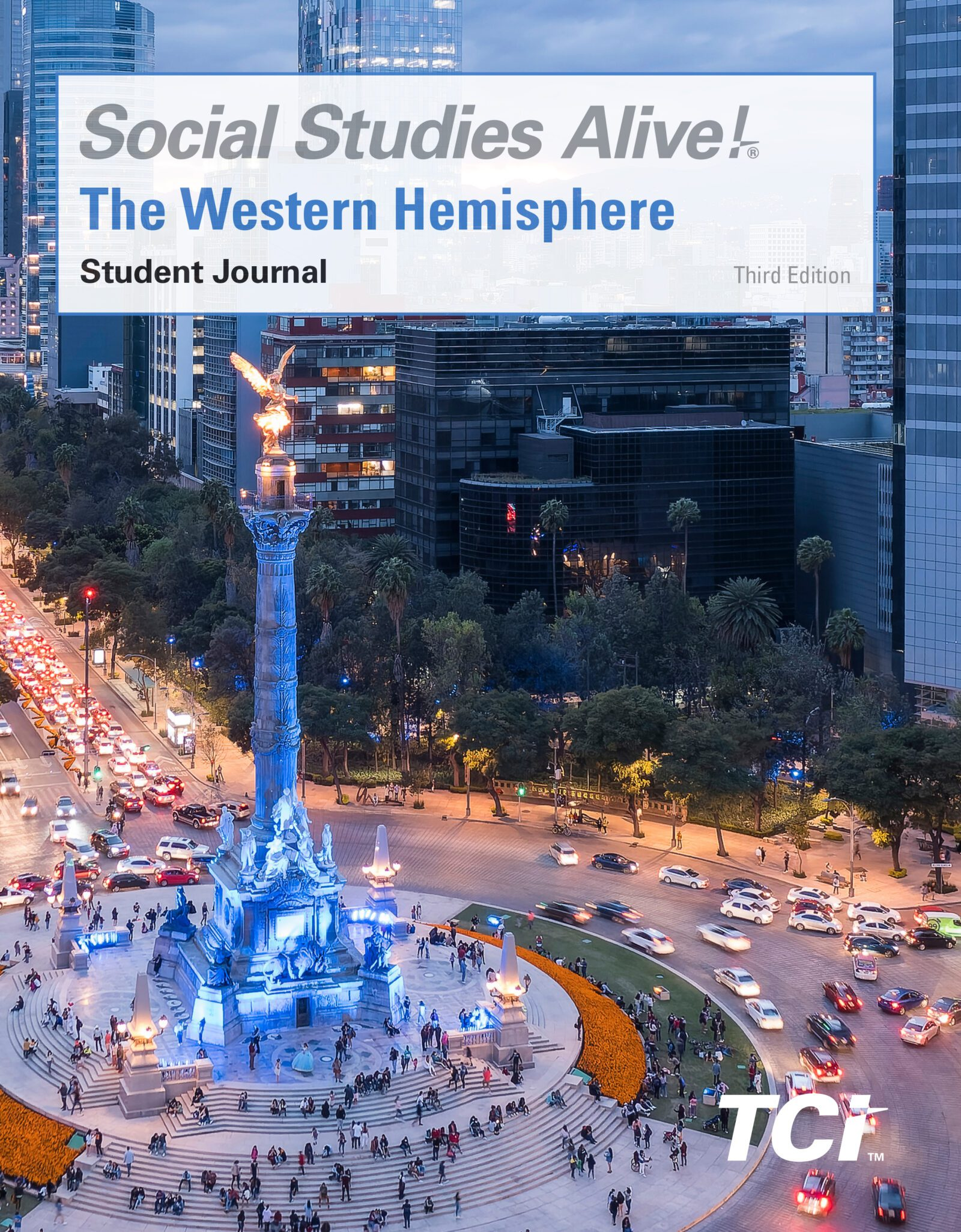
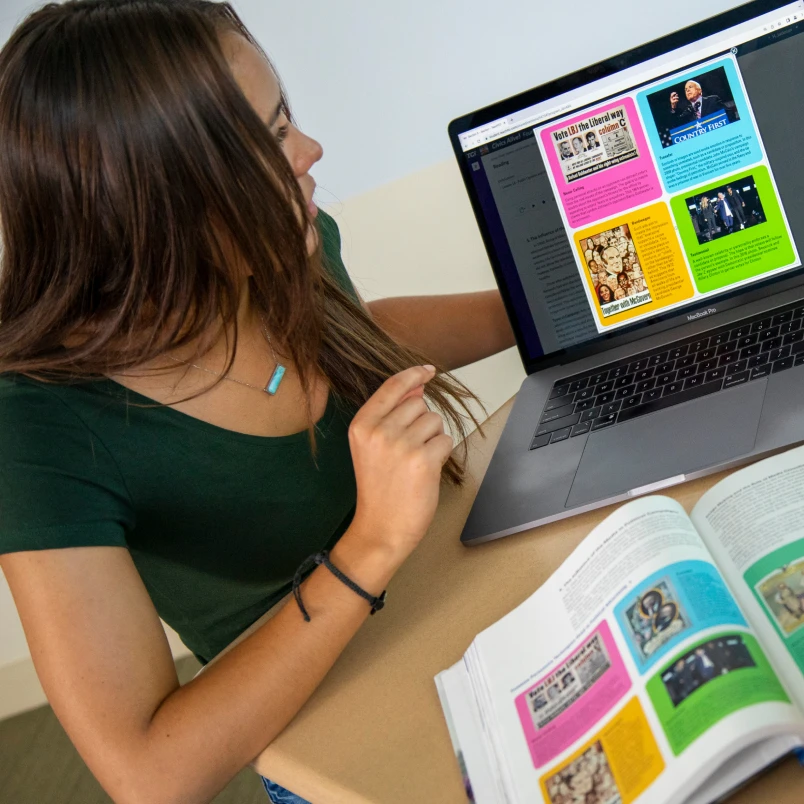
The colorful, easy-to-use, print consumable Student Journal combines standards-based content and rich activities to support student learning. Students will make personal connections that allow them to develop a deep understanding of key social studies content while building critical social studies and ELA skills. Also available in Spanish.
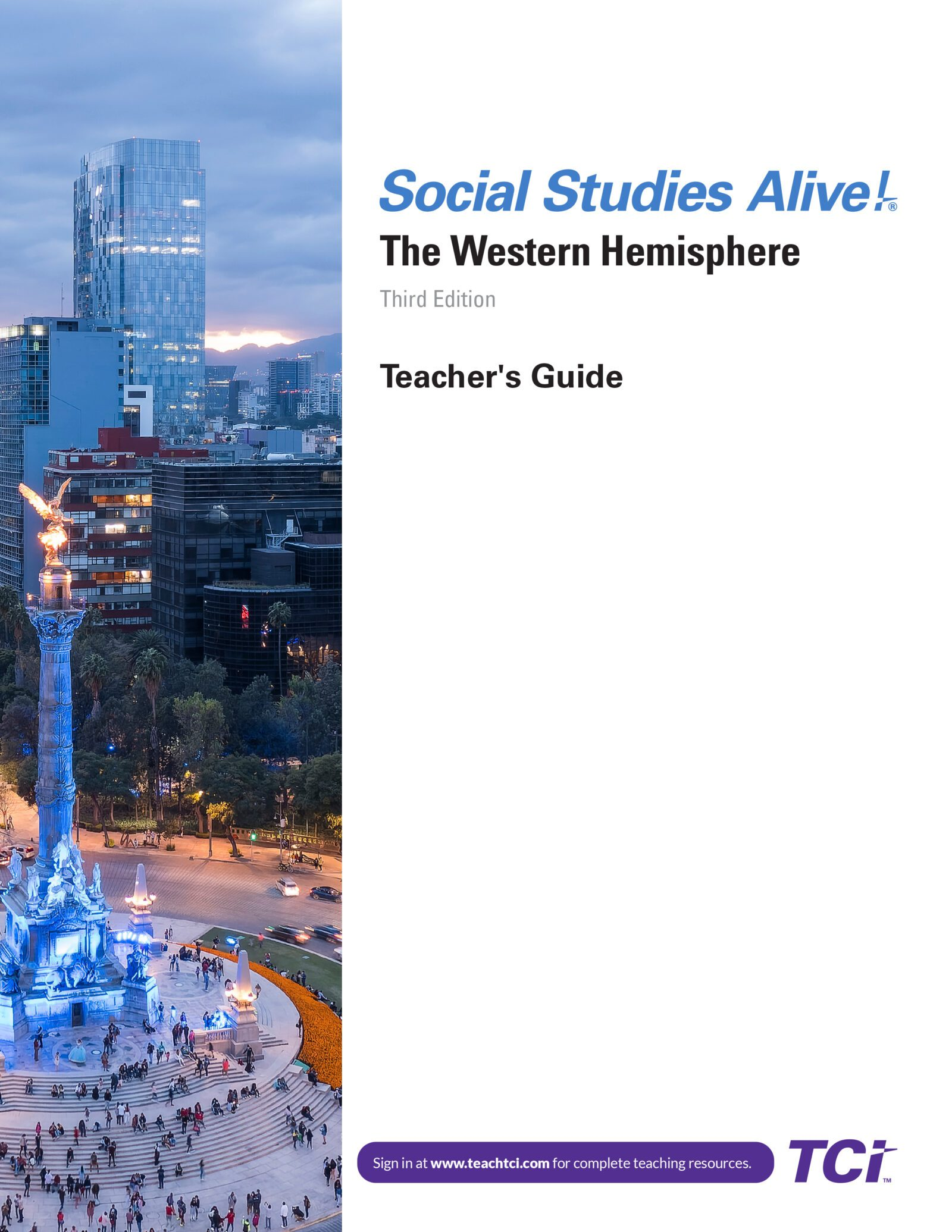
Teacher's Guide supports everything from lesson planning to grading — step-by-step procedures, time estimates, differentiation strategies, and answer keys, ready to use offline or as a quick reference while teaching. Also available in Spanish.
The Activity Cards are laminated, reusable cards that contain vibrant, interactive content for students. The cards include large maps, game boards, and manipulatives that can be cut out and be reused year after year. Also available in Spanish.
Whether you're exploring programs, preparing for an adoption, or ready to get a quote — our team is here to help.
Connect with a TCI Expert