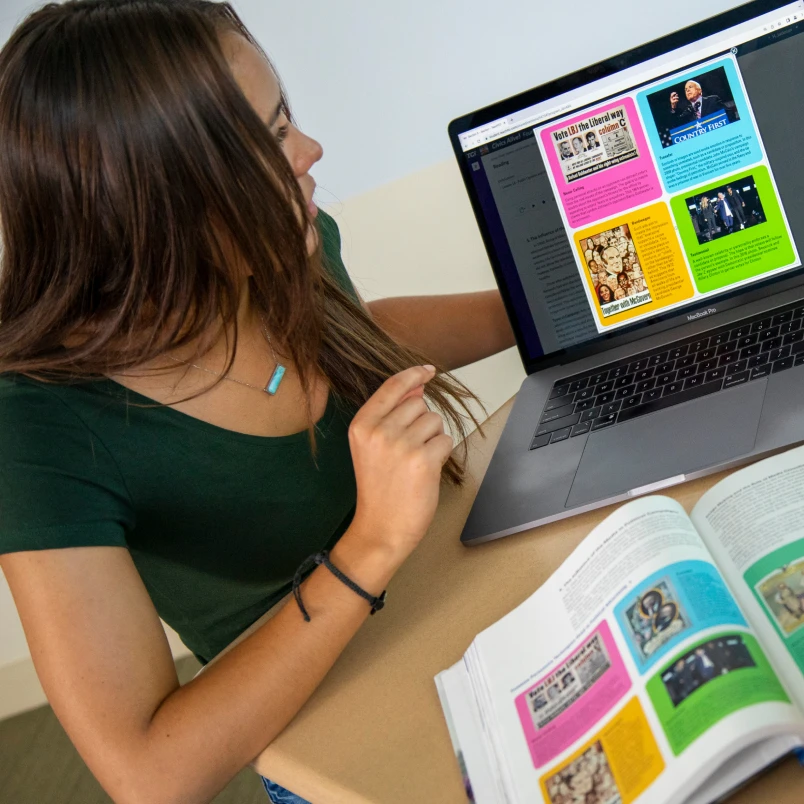
8th Grade Integrated
A tool dropped by an astronaut in orbit does not fall away but travels right alongside them. Students build a model to explain phenomena like that one, revising it as they work through forces, waves, space, and evolution.
Not part of the all states program list
Choose a different state above, or browse every program in Middle School

What Students Will Explore
Integrated Segment 1
The Speed of Objects and Waves
Forces and waves open the program with a raft that waves cannot push to shore. Students design a go-cart that can survive a collision, then propose an engineering solution to stop waves from eroding the cliff beneath a coastal restaurant.
Integrated Segment 2
Modeling Light in the Solar System
A green flash at sunset opens this segment on light and the sky. Students build a classroom planetarium to model rotation, seasons, moon phases, and eclipses, then create a piece of art that shows off key properties of light.
Integrated Segment 3
Noncontact Forces Influence Phenomena
Noncontact forces start with a tool that an astronaut drops in orbit, which travels along with them. Students investigate gravity, electricity, and electromagnetism through drone design, then advise the International Astronomical Union on how to classify the eight planets.
Integrated Segment 4
Major Collisions in the History of Life
Major collisions begin with fossil evidence that an object from space struck Earth and led to mass extinction. Students consult on a space movie's physics, then work as paleontologists gathering data from fossil sites to piece together the history of life.
Integrated Segment 5
Evolution Explains Life's Unity and Diversity
Evolution opens with a simple observation: faster cheetahs catch more food. Students trace natural selection from Darwin's finches to whale anatomy, then turn to kinetic and potential energy by analyzing a Rube Goldberg chain reaction.
Integrated Segment 6
Sustaining Local and Global Diversity
Polar bear populations rising in some places and falling in others close the program. Students debate bioethics around artificial selection and genetic engineering, design a thermos for desert use, and compare analog and digital ways of sending information.
Explore the Program
-
View the Scope and Sequence
View the Scope and Sequence
See every unit and lesson at a glance.
-
Review the Correlations
Review Correlations
See exactly how the program aligns to your state standards.
Request Sample
Request access to digital samples of the student and teacher materials.
Contact SalesOne Program. Every Resource You Need.
From an interactive digital platform to hands-on print materials and teacher tools, see everything included to help you teach and your students learn.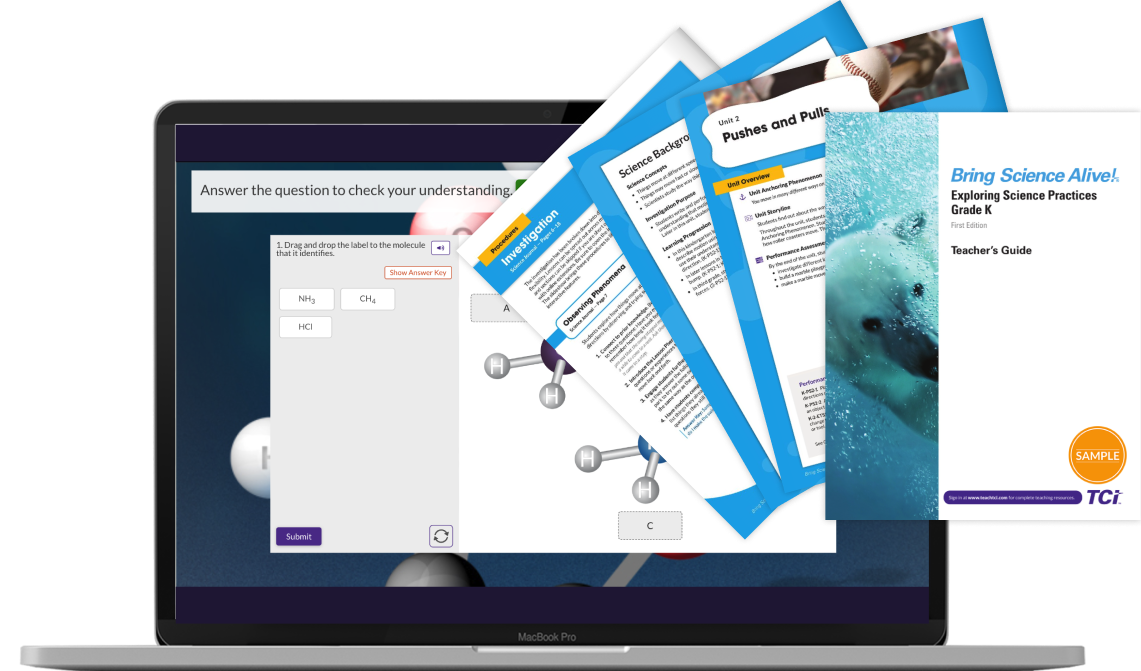
Student Materials
-
Reference Text
The Reference Text provides students with rich background knowledge and context to support their science investigations. Engaging text weaves in engineering content that connects directly to Unit Storylines and Anchoring Phenomena, helping students think and work like scientists. Also available in Spanish.
-
Interactive Student Notebook
The print consumable Interactive Student Notebook provides students a place to record observations, graph data, construct arguments, and more during investigations and engineering challenges. Also available in Spanish.
Teacher Materials
-
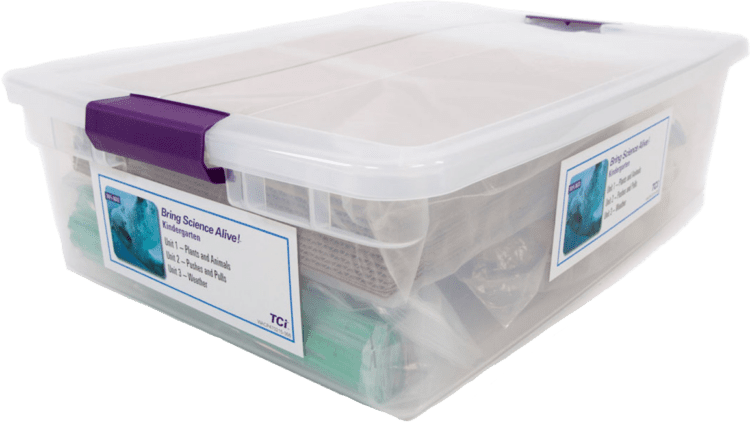
Ready-to-Use Kit
Bring Science Alive! comes with ready-to-use Materials Kits that support in-class investigations. Kits are thoughtfully organized for ease of use and to reduce waste. If you run low on consumable materials, order a refill kit from TCI's online store.

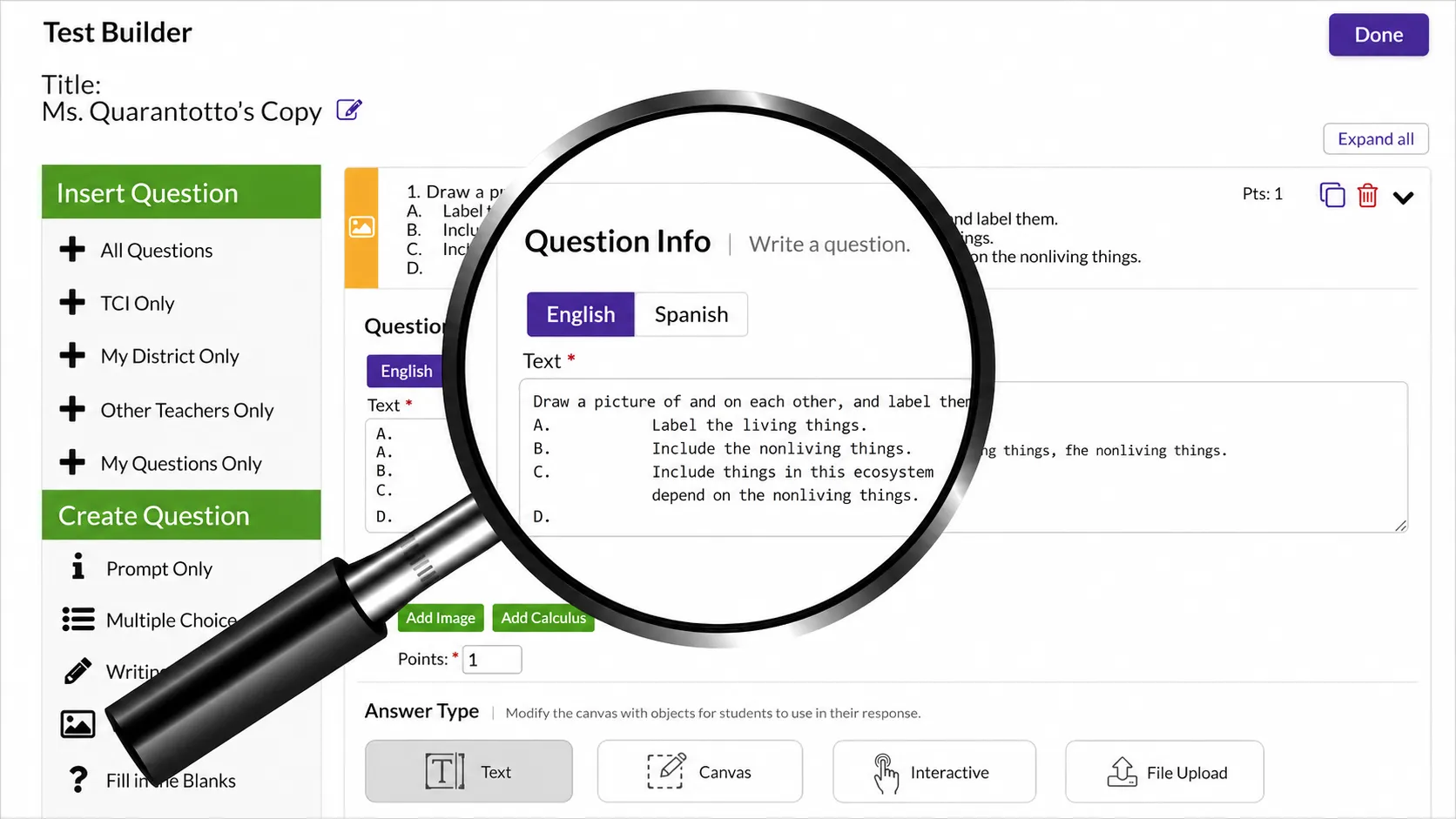
Ready to Bring TCI to Your District?
Whether you're exploring programs, preparing for an adoption, or ready to get a quote — our team is here to help.
Connect with a TCI Expert