Key Ideas:
The debate over classroom screen time often treats devices as the problem, but the real dividing line is whether a device has students passively consuming content or actively engaging with it to think critically.
Research grounded in the work of Stanford sociologist Elizabeth Cohen found that interaction predicts real achievement gains for students starting from very different places.
TCI's own lesson design, including a Silk Road trading simulation and a Red Dot game activity used to teach Cold War-era suspicion, shows technology working as one tool among several to spark movement, discussion, and disagreement among students.
Cooperative skills, such as agreeing and disagreeing productively or presenting a group's thinking, need direct instruction before they develop on their own.
Interactive teaching builds communication, collaboration, problem-solving, and critical thinking, the same durable skills showing up in state portrait of a graduate frameworks.
The Real Question Behind Classroom Screen Time
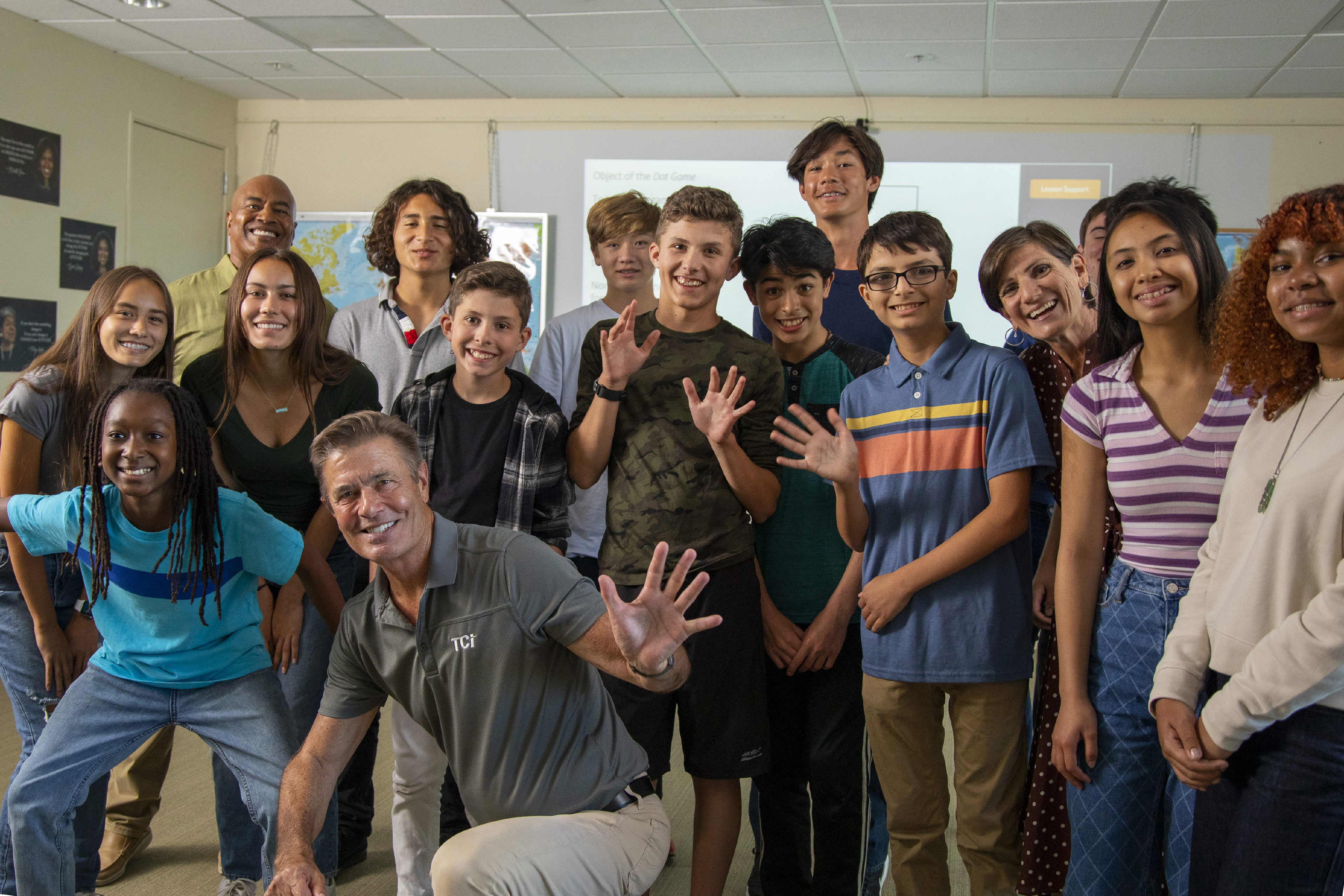
Ask a room full of educators about screen time right now, and the conversation splits fast: one side worries that devices are crowding out real learning, the other points to them as tools students will use for the rest of their lives. Bert Bower, founder and CEO of TCI, has spent decades inside that argument, and he sees both sides missing the actual question: is the tool in students’ hands building interaction between them, or replacing it?
Bower states it in stark terms. "I can absolutely guarantee you, based on the research, a passive classroom, where a kid is sitting as an empty vessel — take off the top of their head, pour in the information, put it back — that is not interaction, that is passive learning," he says.
Bower's view traces back to his doctoral research at Stanford, where he worked with sociologist Elizabeth Cohen. Her central finding, in his words, was simple: interaction equals learning. Classrooms built around lecture and independent reading produced flat results. Classrooms built around visual discovery, movement, and group problem-solving produced real achievement gains, with every kind of student sharing in them, including students who rarely spoke up under the lecture model.
More recent research bears out the same connection between instructional design and outcomes: a 2026 meta-analysis of social studies interventions spanning nearly 70 studies in grades 6–12 found a positive, medium-sized effect on student learning, the same pattern TCI builds into its own lessons through high-quality instructional materials (HQIM). The finding reframes the current screen-time debate: the real question is whether a given minute of class time is designed for interaction.
Bower calls the whole devices-versus-interaction framing a false dichotomy. "It isn't about whether screens are bad," he says. "It's whether the screens are helping the teacher create human interaction." He goes further: educational technology, in his view, is "one arrow in a quiver of many arrows" used to create real interaction in the classroom, useful only when it's aimed at getting students talking, moving, and thinking with one another rather than working alone.
Why Human Interaction Builds Durable Skills
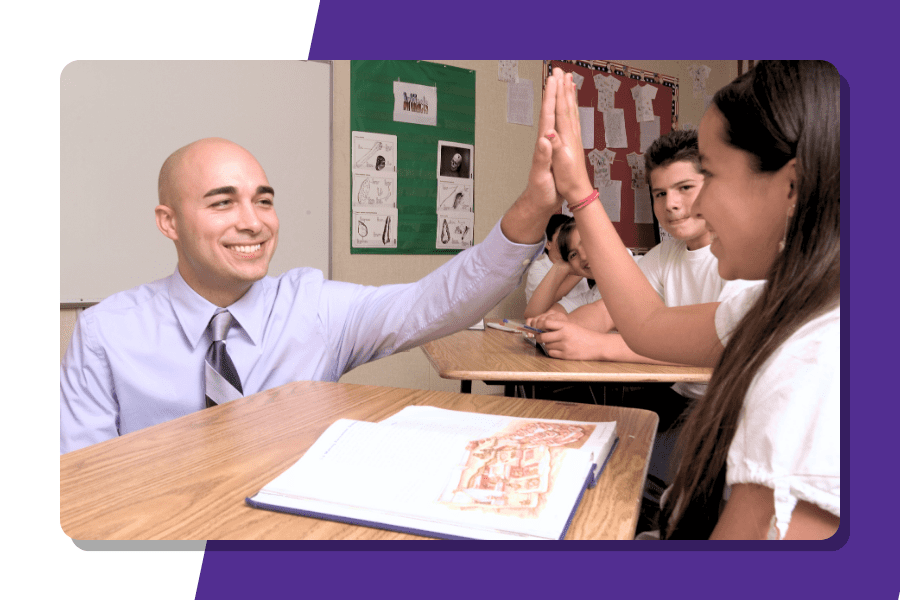
A strong educator can walk into nearly any classroom and know within a minute whether real learning is happening. Bower puts it plainly: "Within a minute, you should be able to blink and know true education is happening here." The test comes down to whether students are working with the content and with each other, or working alone through a screen. This distinction lines up with what researchers call active learning: engaging directly with material through discussion, application, and collaboration rather than receiving it passively.
Communication, collaboration, problem-solving, critical thinking, civic engagement, and the ability to evaluate sources through inquiry all grow out of interaction. Those are the same skills showing up across dozens of state portrait of a graduate frameworks, which define what a truly prepared student looks like beyond a test score. Interaction is the mechanism producing those skills, long before any state wrote them into a framework.
Bower has watched that alignment take shape from the inside. TCI has built lessons around this same principle since 1989, well before "durable skills" became the term districts use today. He also points out that this isn't a new demand from employers. "That's what employers wanted in the 1950s. That's what they've always wanted," he says. "Are classrooms and teachers and human interaction necessary? They're vital."
Recognizing that interaction produces these skills raises the next question: how do you teach students to interact well?
How to Learn Through Interaction
Interactive learning asks students to do something a lecture never requires: work with each other in real time, take a position, and sometimes disagree with a classmate. Those are skills, and skills need direct instruction before they show up on their own. Bower is candid about what happens in a classroom that hasn't built them yet: students get off track, skip steps, or let one or two confident voices carry the whole conversation. "Kids aren't just going to do it," he says. "They've got to be taught it. These are real, concrete skills."
Bower is careful to separate this from interaction in general. "You can go into a lot of classrooms and see a lot of human interaction, and it's not learning," he says. "Kids are gossiping, kids are passing notes, kids are intimidating one another. We're talking about cooperative, inclusive human interaction."
Making eye contact, agreeing and disagreeing productively, and presenting a group's thinking all take practice, just like reading or writing. Districts weighing a new curriculum can look for evidence that this instruction happens deliberately, whether cooperative skills are built into a lesson before the activity starts, or a lesson simply assumes students already have them. "We have an entire professional development component and a curricular component that teaches cooperative, inclusive skills," Bower says.
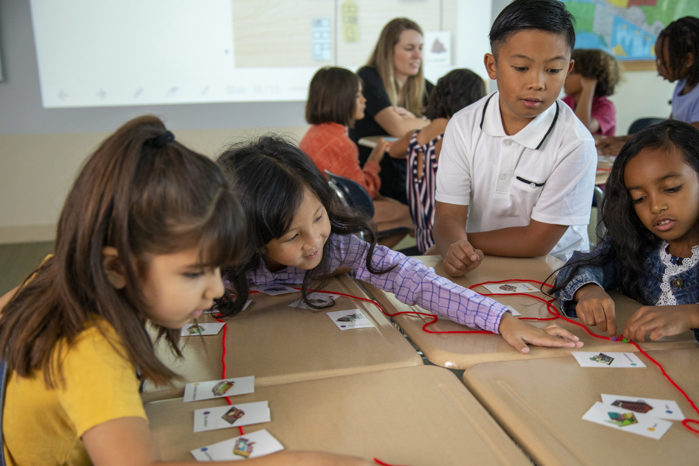
Simple structures, like assigning roles in a group activity so every student has a specific job and a reason to speak, give teachers a concrete starting point for intentionally building those skills.
Interaction in Practice
TCI’s classroom lessons show what this can look like when it’s designed well. Two of the company’s signature activities, one on the Silk Road and one on Cold War-era suspicion, put students in motion and in conflict with each other, with screens guiding and supporting that interaction rather than driving it.
TCI's Silk Road simulation puts sixth graders on the trade route rather than just having them read about it. Students collect tokens as they move through five stops, climbing mountains, crossing deserts, and dodging the same hazards traders once faced. Bower describes the scene as controlled chaos: some students negotiate constantly, others hoard their tokens, and a few get stopped along the way by classmates playing bandits. Afterward, students move into TCI’s Video Activity, a separate three-minute video with built-in questions, and because they’ve already lived a version of the journey, they watch it differently.
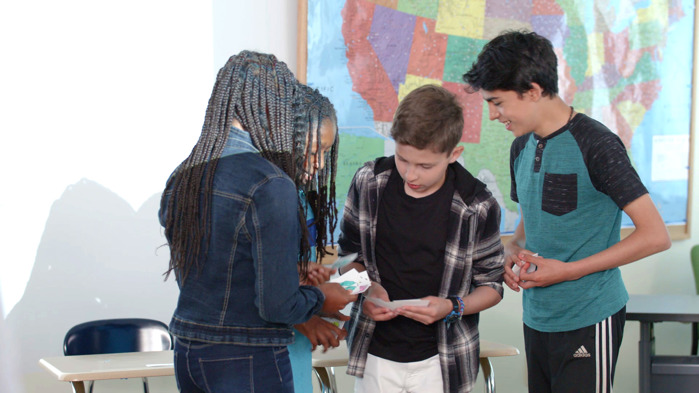
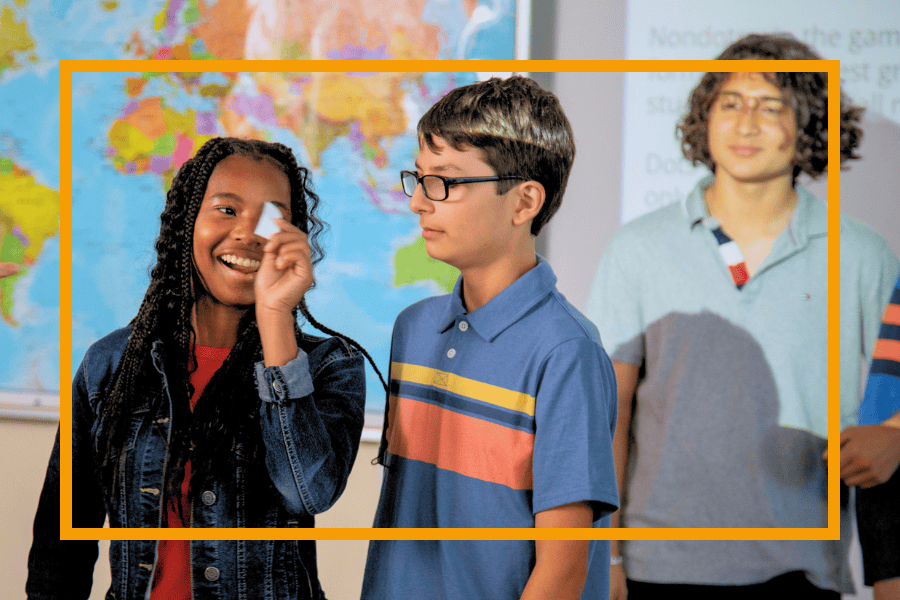
The Red Dot activity, used to teach McCarthyism and Cold War-era suspicion, follows the same pattern with a simpler setup: a short screen element gets students ready, then the room takes over. A simple onscreen animation shows students how to play the game. Once they understand the rules, the animation steps back and lets the interaction it triggered carry the rest of the lesson. Students receive a slip of paper. A few are secretly marked with a dot. The goal: form the largest group without one. Within minutes, students start accusing each other, groups splinter, and a classroom that was calm five minutes earlier fills with real, if temporary, mistrust. Bower has watched students in class after class connect what just happened to the Salem witch trials on their own, and from there, the discussion moves naturally into loyalty oaths and Cold War-era politics.
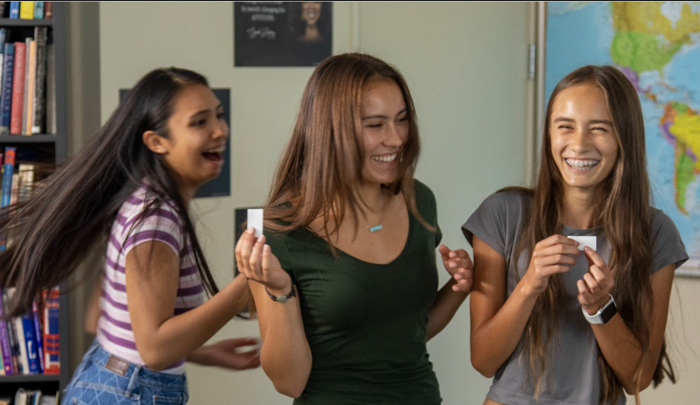
Bower points to similar structures across TCI's curriculum. In an American Revolution lesson, students play a tug-of-war that is stacked in Britain’s favor, then watch the rules shift once France enters the war on the American side. It’s a physical rule change, and Bower says it makes the turning point land before students read a word about it.
TCI’s screen elements, whether it’s an interactive slideshow that lets students explore the Silk Road map on their own before the simulation, the Video Activity that follows, or the onscreen animation that teaches the Red Dot game, are built to guide and support interaction rather than replace it. Each one sets the stage for what comes next or sharpens what students have already built together, and the simulation and game at the center of each lesson don’t need a screen at all.
Keeping the Same Standard as Technology Changes
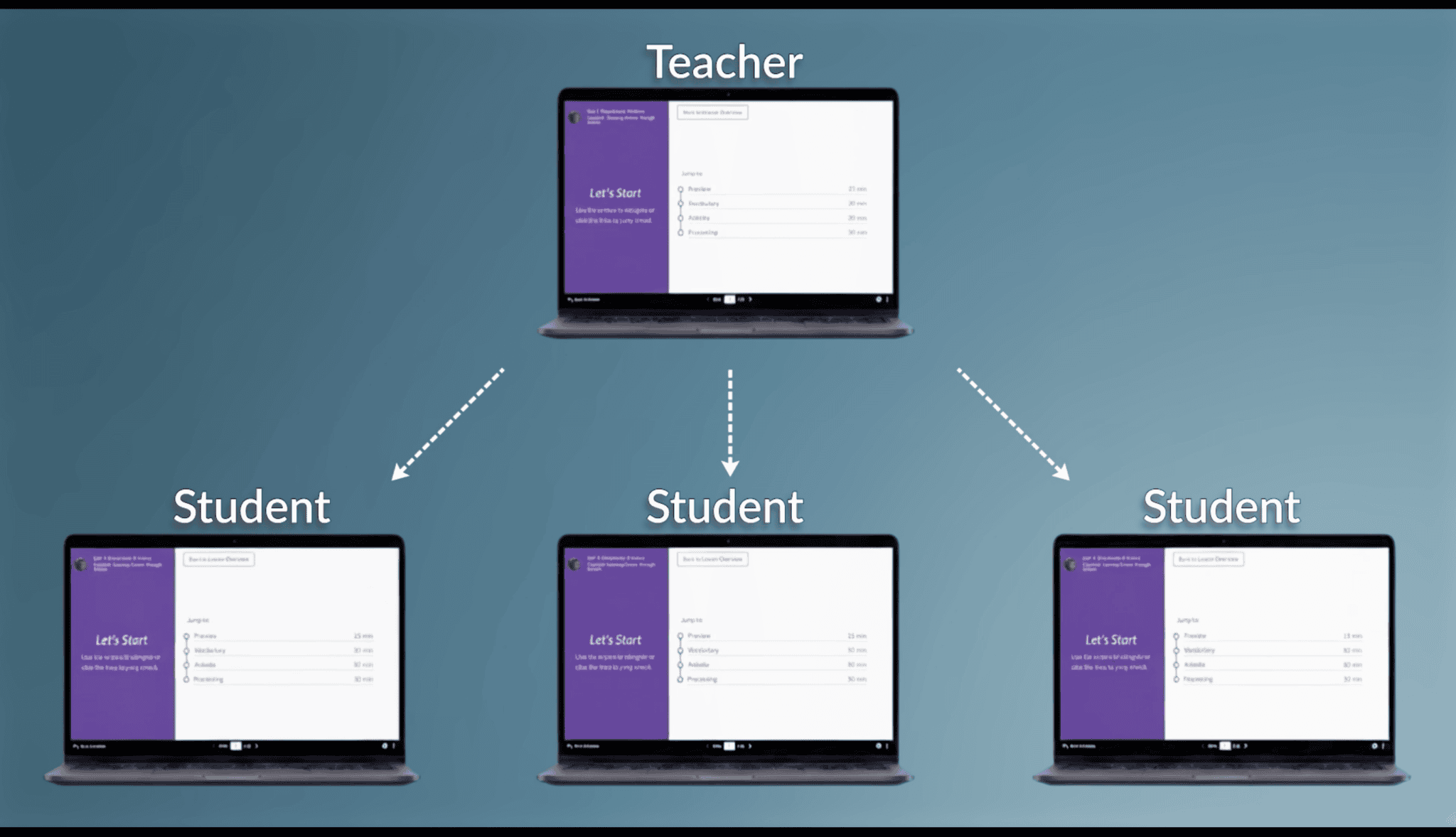
Classroom technology keeps changing, and Bower applies the same test to each new tool that shows up: does it help students interact, or does it substitute for interaction? That standard shows up in TCI’s teacher-paced mode, a classroom management feature that lets a teacher guide the whole class through a lesson together rather than having students click through a program on their own timeline. Bower frames the shift in familiar terms: “The teacher is not the sage on the stage. The teacher is the guide on the side.” The feature’s job is to remove friction so the teacher can spend more time on the parts only a person can do: reading the room, redirecting a conversation, deciding when students are ready to move on together.
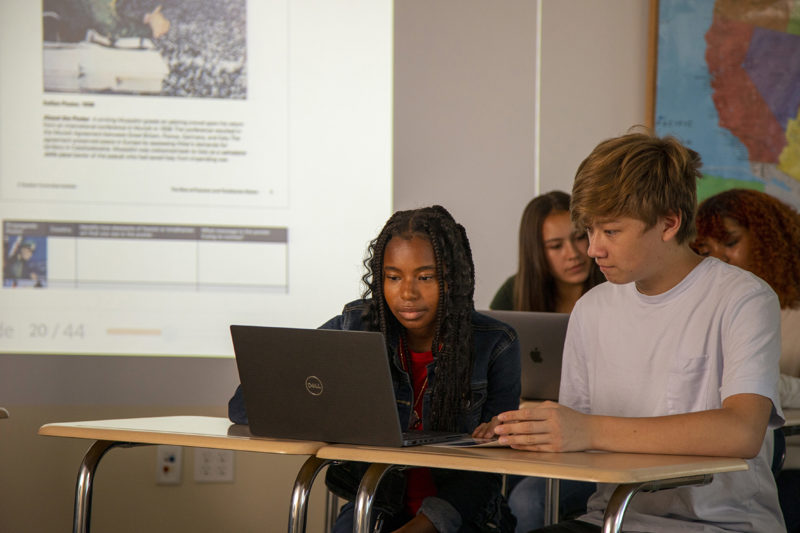
The same standard applies as AI shows up in classrooms, too. TCI’s own approach to AI is built around supporting human connection instead of replacing it, with AI-generated content grounded in TCI’s own standards-aligned materials rather than an open-ended tool. The question isn’t whether a feature runs on AI, a slideshow, or a worksheet; it’s whether it’s designed to get students talking, moving, and thinking together rather than working alone.
Keeping Human Interaction at the Center of the Classroom
Districts and teachers can apply this same standard to whatever tool shows up in the classroom next, screen, AI feature, or otherwise: does it ask students to sit and receive, or to turn to a partner, take a position, and defend it?
Bower has been making this same argument, in one form or another, for 36 years. His summary of it hasn't changed: "If interaction equals learning, which we know it does, let's constantly think about all the ways that we can fuel human interaction in the classroom." As he puts it, "At TCI, we don't talk about it, we do about it."