Store

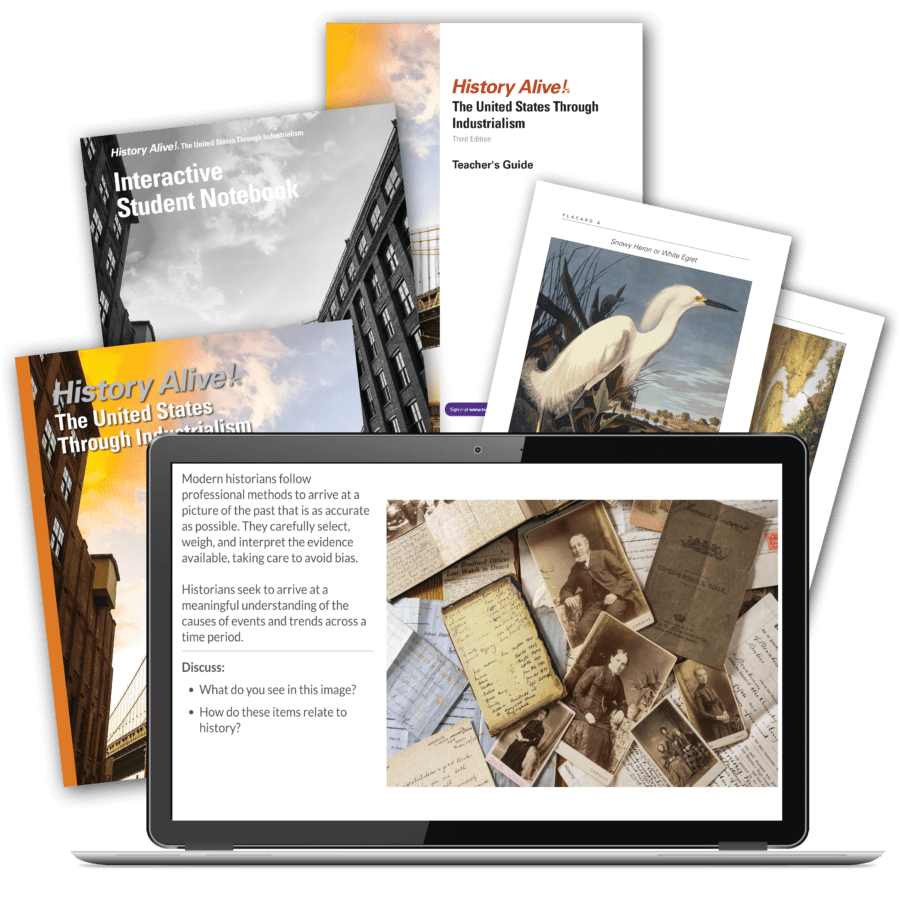
History Alive! The Ancient World

Table of Contents

Expand All Collapse All

Unit 1: Early Humans and the Rise of Civilization

1. Investigating the Past Video

Essential Question: How do social scientists interpret the past?

In a Social Studies Skill Builder, students learn how social scientists reconstruct the lives of prehistoric humans by examining images of cave paintings and other artifacts.

Why Teach This Lesson?

2. Early Hominids Video

Essential Question: What capabilities helped hominids survive?

In a Visual Discovery activity, students analyze images of various hominid groups and explore how physical and cultural adaptations gave later hominid groups advantages over earlier groups.

Why Teach This Lesson?

3. From Hunters and Gatherers to Farmers Video

Essential Question: How did the development of agriculture change daily life in the Neolithic Age?

In a Writing for Understanding activity, students learn how the Neolithic development of agriculture led to a stable food supply, permanent shelters, larger communities, specialized jobs, and trade.

Why Teach This Lesson?

4. The Rise of Sumerian City-StatesVideo

Essential Question: How did geographic challenges lead to the rise of city-states in Mesopotamia?

In a Response Group activity, students learn how responses to geographic challenges resulted in the formation of complex Sumerian city-states.

Why Teach This Lesson?

5. Ancient Sumer Video

Essential Question: Why do historians classify ancient Sumer as a civilization?

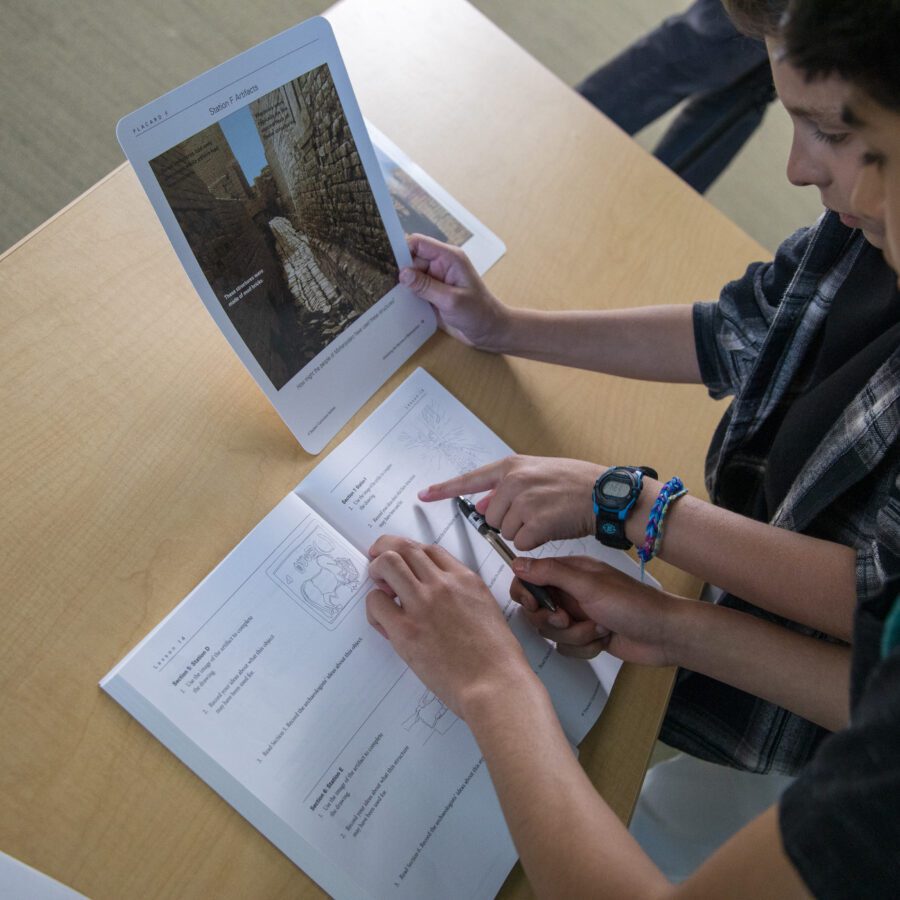
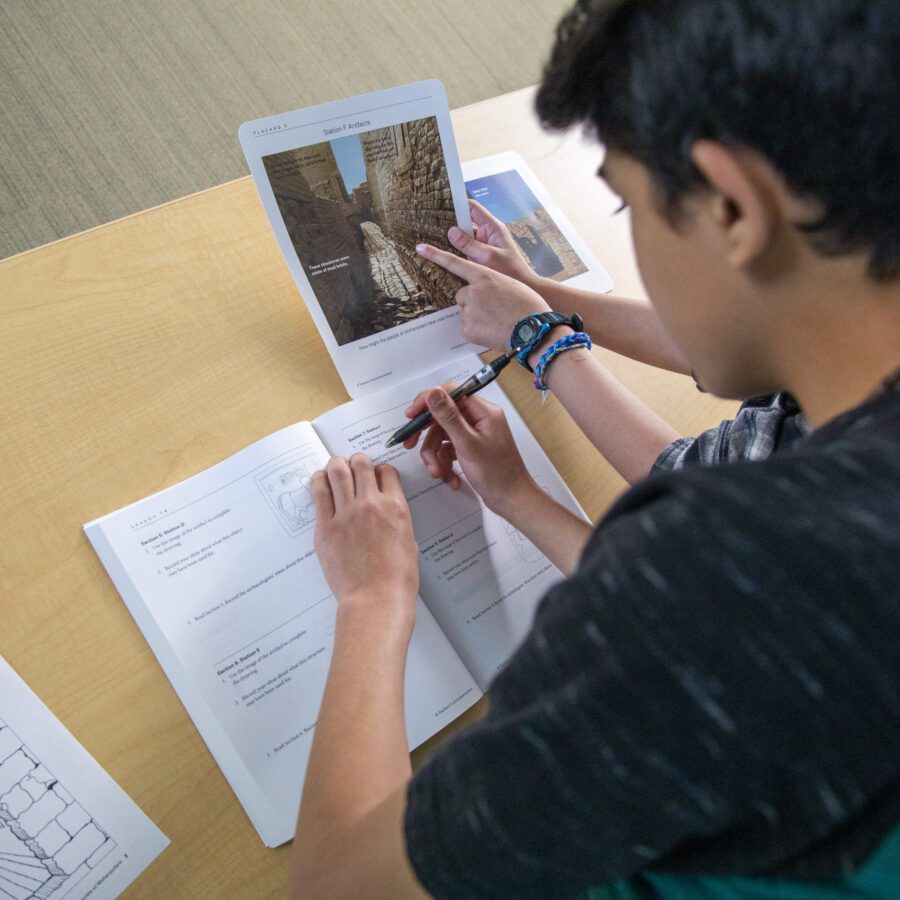
Students work in pairs in a Social Studies Skill Builder activity to learn about the characteristics of civilization and analyze artifacts to determine how each characteristic was exhibited in ancient Sumer.

Why Teach This Lesson?

6. Exploring Four Empires of Mesopotamia Video

Essential Question: What were the most important achievements of the Mesopotamian empires?

Students work in small groups in a Problem Solving Groupwork activity to create "mechanical dioramas" that illustrate major achievements of the Akkadian, Babylonian, Assyrian, and Neo-Babylonian empires that ruled Mesopotamia from approximately 2300 to 539 B.C.E.

Why Teach This Lesson?

Unit 2: Ancient Egypt and the Middle East

7. Geography and the Early Settlement Video
of Egypt, Kush, and Canaan

Essential Question: How did geography affect early settlement in Egypt, Kush, and Canaan?

In an Experiential Exercise, students use their bodies to recreate the physical geography of ancient Egypt, Kush, and Canaan to learn about how environmental factors influenced early settlement in these areas.

Why Teach This Lesson?

8. The Ancient Egyptian Pharaohs Video

Essential Question: What did the pharaohs of ancient Egypt accomplish, and how did they do it?

In a Writing for Understanding activity, students board an Egyptian sailing boat and "visit" monuments along the Nile River, to learn about four ancient Egyptian pharaohs and their important accomplishments.

Why Teach This Lesson?

9. Daily Life in Ancient EgyptVideo

Essential Question: How did social class affect daily life in ancient Egypt?

Students create and perform interactive dramatizations in a Problem Solving Groupwork activity to learn about the social structure of ancient Egypt and its effect on daily life for members of each social class.

Why Teach This Lesson?

10. The Kingdom of KushVideo

Essential Question: In what ways did location influence the history of Kush?

In a Visual Discovery activity, students analyze images of significant events and leaders from four periods in the history of ancient Kush to learn about the development of the independent kingdom of Kush and its changing relationship with ancient Egypt.

Why Teach This Lesson?

11. The Origins of Judaism Video

Essential Question: How did Judaism originate and develop?

In a Writing for Understanding activity, students identify key historical leaders of the ancient Israelites and explain their role in the development of Judaism.

Why Teach This Lesson?

12. Learning about World Religions: Judaism

Essential Question: What are the central teachings of Judaism, and why did they survive to modern day?

In an Experiential Exercise, students identify the central teachings of Judaism as they explore ways in which these traditions have survived throughout history.

Unit 3: Ancient India

13. Geography and the Early Settlement of India Video

Essential Question: How did geography affect early settlement in India?

In a Response Group activity, students identify physical features of the Indian subcontinent and explain how geography influenced the location of early settlement in India.

Why Teach This Lesson?

14. Unlocking the Secrets of Mohenjodaro

Essential Question: What can artifacts tell us about daily life in Mohenjodaro?

Students act as archaeologists in an Experiential Exercise and examine artifacts from Mohenjodaro to learn about daily life in the Indus valley civilization.

15. Learning about World Religions: Hinduism

Essential Question: What are the origins and beliefs of Hinduism?

In a Response group activity, students analyze images representing important beliefs in Hinduism to discover the religion's origins in ancient traditions and discuss how these beliefs affect life in ancient India and today.

16. Learning about World Religions: Buddhism Video

Essential Question: What are the main beliefs and teachings of Buddhism?

In a Visual Discovery activity, students analyze images to learn about the life of Siddhartha Gautama and how his teachings became the basis of Buddhism.

Why Teach This Lesson?

17. The First Unification of India

Essential Question: How did Ashoka unify the Mauryan Empire and spread Buddhist values?

Students work in pairs in a Social Studies Skill Builder to interpret excerpts from King Ashoka's edicts to analyze how he unified the Mauryan Empire during his rule.

18. The Achievements of the Gupta EmpireVideo

Essential Question: Why is the period during the Gupta Empire known as a "golden age"?

In a Writing for Understanding activity, students "visit" seven sites around the Gupta Empire that highlight important cultural and intellectual achievements and explain in writing why this period was a "golden age" in ancient India.

Why Teach This Lesson?

Unit 4: Ancient China

19. Geography and the Early Settlement of China

Essential Question: How did geography affect life in ancient China?

In a Problem Solving Groupwork activity, students create a relief map and a geographic poster of China's five regions and support hypotheses about the influence of geography on settlement and ways of life in ancient China.

20. The Shang Dynasty Video

Essential Question: What do Shang artifacts reveal about this civilization?

Students work in pairs in a Social Studies Skill Builder to "excavate" a tomb to learn about the government, social structure, religion, writing, art, and technology of the Shang dynasty.

Why Teach This Lesson?

21. Three Chinese Philosophies Video

Essential Question: How did Confucianism, Daoism, and Legalism influence political rule in ancient China?

In an Experiential Exercise, students learn about Confucianism, Daoism, and Legalism under classroom conditions that reflect the main beliefs of each philosophy.

Why Teach This Lesson?

22. The First Emperor of China

Essential Question: Was the Emperor of Qin an effective leader?

In a Visual Discovery activity, students analyze and bring to life images about Qin Shihuangdi's political and cultural unification of China, his efforts to protect China's northern boundaries, and his dispute with Confucian scholars.

23. The Han Dynasty Video

Essential Question: In what ways did the Han dynasty improve government and daily life in China?

Students work in pairs in a Social Studies Skill Builder and visit seven stations to learn about Han achievements in the fields of warfare, government, agriculture, industry, art, medicine, and science.

Why Teach This Lesson?

24. The Silk RoadVideo

Essential Question: How did the Silk Road promote an exchange of goods and ideas?

Students travel along a simulated Silk Road in an Experiential Exercise to learn about facing obstacles, trading products, and absorbing cultural exchanges that occurred along the Silk Road during the Han dynasty.

Why Teach This Lesson?

Unit 5: Ancient Greece

25. Geography and the Early Settlement of Greece Video

Essential Question: How did geography influence settlement and way of life in ancient Greece?

Students examine and analyze thematic maps in a Visual Discovery activity to learn about the physical geography of ancient Greece and how it influenced the development of Greek civilization.

Why Teach This Lesson?

26. The Rise of DemocracyVideo

Essential Question: How did democracy develop in ancient Greece?

In an Experiential Exercise, students use the principles of monarchy, oligarchy, tyranny, and democracy to select and play music for the class, as a way to examine the various forms of government in ancient Greece that led to the development of democracy.

Why Teach This Lesson?

27. Life in Two City-States: Athens and Sparta

Essential Question: What were the major differences between Athens and Sparta?

In a Social Studies Skill Builder, students examine the major differences between Athens and Sparta by working in pairs to create placards with illustrations and challenge questions about each city-state.

28. Fighting the Persian Wars Video

Essential Question: What factors influenced the outcome of the Persian wars?

In a Response Group activity, students learn about the wars between the Greek city-states and the Persian Empire by dramatizing key events and debating which factors contributed to the eventual outcome of the wars.

Why Teach This Lesson?

29. The Golden Age of Athens

Essential Question: What were the major cultural achievements of Athens?

In a Writing for Understanding activity, students take a "walking tour" of Athens, visiting six sites to learn about various aspects of Greek culture. Students then write a speech describing Athens during its Golden Age.

30. Alexander the Great and His Empire Video

Essential Question: How did Alexander build his empire?

In a Response Group activity, students learn about the rise of Macedonia after the Peloponnesian War and debate the degree of success Alexander the Great had in uniting the diverse peoples of his empire.

Why Teach This Lesson?

31. The Legacy of Ancient Greece Video

Essential Question: How did ancient Greece contribute to the modern world?

In a Social Studies Skill Builder, students learn about the enduring contributions of the ancient Greeks by matching descriptions of modern life to images of Greek achievements in language, literature, government, the arts, the sciences, and sports.

Why Teach This Lesson?

Unit 6: Ancient Rome

32. Geography and the Early Development of Rome

Essential Question: How did the Etruscans and Greeks influence the development of Rome?

In a Response Group Activity, students learn about the founding of Rome, and examine images to identify evidence of Etruscan and Greek influences on Rome.

33. The Rise of the Roman Republic

Essential Question: What were the characteristics of the Roman Republic and how did they change over time?

In an Experiential Exercise, students assume the roles of patricians and plebeians to learn how the struggle between these two groups led to a more democratic government in the Roman Republic.

34. From Republic to Empire Video

Essential Question: Did the benefits of Roman expansion outweigh the costs?

In a Problem Solving Groupwork activity, students explore and record events leading to the expansion of Roman territory and the creation of the empire.

Why Teach This Lesson?

35. Daily Life in the Roman EmpireVideo

Essential Question: How did wealth affect daily life in the Roman Empire?

In a Social Studies Skill Builder, students work in pairs and read about eight aspects of ancient Roman life—such as education and family life—and explore how a teenager might have experienced each.

Why Teach This Lesson?

36. The Origins and Spread of Christianity

Essential Question: How did Christianity originate and spread?

In a Social Studies Skill Builder, students learn about the development and spread of Christianity in the Roman Empire, and analyze parables to understand the teachings of Jesus.

37. Learning about World Religions: Christianity

Essential Question: How are Christians' lives shaped by the beliefs and practices of Christianity?

In a Visual Discovery activity, students analyze images of Christian sacraments, worship, and holidays to learn about the key beliefs and practices of Christianity.

38. The Legacy of Rome in the Modern WorldVideo

Essential Question: To what extent does ancient Rome influence us today?

In a Response Group activity, students play the "Rome to Home" game to discover how aspects of Roman culture, such as art and language, influence modern life.

Why Teach This Lesson?


© 2013 - Teachers' Curriculum Institute | Social Studies Textbooks & Curriculum for K-12 Schools